Bedsores & Pressure Injuries in Rhode Island Nursing Homes
A practical guide to pressure-injury risk, staging, prevention, repositioning, nutrition, wound care, infection, sepsis, documentation, and when worsening skin breakdown deserves closer investigation.
What is a pressure injury?
A pressure injury—often called a bedsore, pressure ulcer or decubitus ulcer—is damage to skin and underlying tissue associated with pressure, shear, friction or related factors. They commonly develop over bony areas such as the sacrum, heels, hips, ankles and elbows.
Pressure injuries are especially important in nursing homes because many residents have limited mobility, frailty, incontinence, poor nutrition, chronic illness or other conditions that increase risk.
Who is at higher risk?
- Residents who cannot reposition themselves independently.
- Residents who are bedbound or wheelchair dependent.
- People with poor nutrition or significant weight loss.
- Residents with incontinence or frequent moisture exposure.
- People with diabetes or poor circulation.
- Residents with impaired sensation.
- People with advanced dementia or severe illness.
- Residents with previous pressure injuries.
How are pressure injuries staged?
Pressure injuries are commonly described by stage according to the depth and characteristics of tissue damage. Families may hear terms such as Stage 1, Stage 2, Stage 3, Stage 4, unstageable pressure injury, or deep tissue pressure injury.
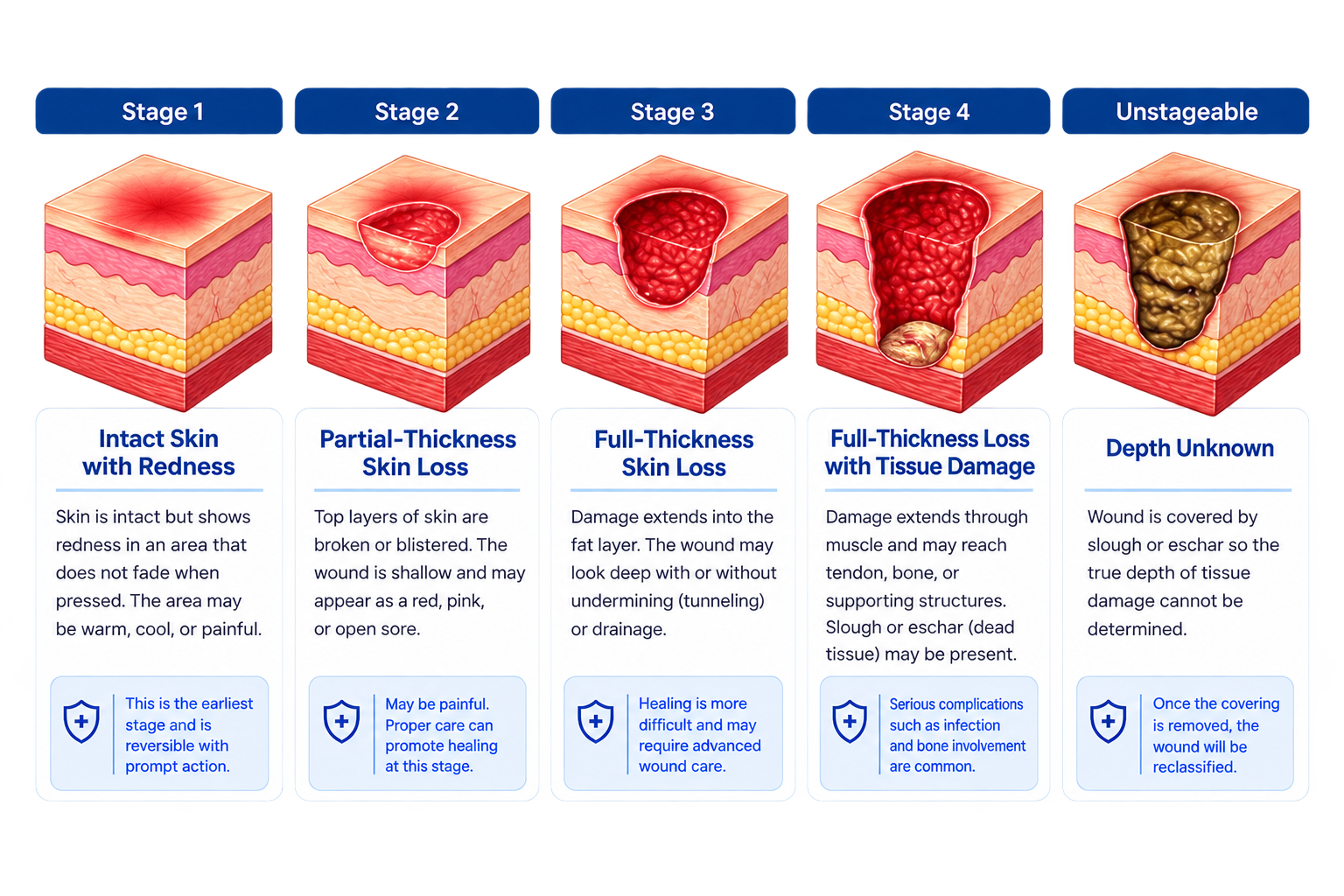
Illustrated pressure injury stages. This simplified medical illustration is for education only. Actual wounds can look different, and staging should be performed by an appropriately trained clinician.
Stage 1
Skin remains intact but shows persistent redness or discoloration that does not resolve as expected after pressure is relieved.
Stage 2
Partial-thickness skin loss may appear as a shallow open wound or blister-like injury.
Stage 3
Full-thickness skin loss extends into deeper tissue. Fat may be visible, although muscle, tendon and bone are not exposed.
Stage 4
Full-thickness tissue loss extends deeply enough that muscle, tendon, cartilage or bone may be exposed or directly palpable.
Unstageable and deep tissue pressure injuries
A wound may be unstageable when the true depth cannot be determined because slough or eschar obscures the base. Deep tissue pressure injury may initially appear as persistent deep red, maroon or purple discoloration and can evolve rapidly.
What should nursing homes do to help prevent pressure injuries?
Pressure-injury prevention should be individualized to the resident's risk factors. Common preventive measures can include:
- Regular skin assessment.
- Repositioning based on the resident's needs and tolerance.
- Pressure-redistributing mattresses or cushions.
- Heel protection.
- Moisture and incontinence management.
- Appropriate nutrition and hydration support.
- Mobility and therapy interventions when appropriate.
- Reducing friction and shear during movement and transfers.
Nutrition, hydration and wound healing
Nutrition and hydration can influence skin integrity and wound healing. Residents with significant weight loss, poor intake, swallowing problems or increased nutritional needs may require additional assessment and intervention.
Families should ask whether the resident has been reviewed by a dietitian, whether weight trends are being monitored, and whether protein, calories, hydration or supplements are being addressed when appropriate.
What should happen when a pressure injury is found?
Once a pressure injury is identified, the facility should assess it, document its characteristics, identify contributing factors and establish a treatment plan. Depending on the wound, care may involve cleansing, dressings, pressure relief, support surfaces, nutrition, pain management and referral to wound-care specialists or other clinicians.
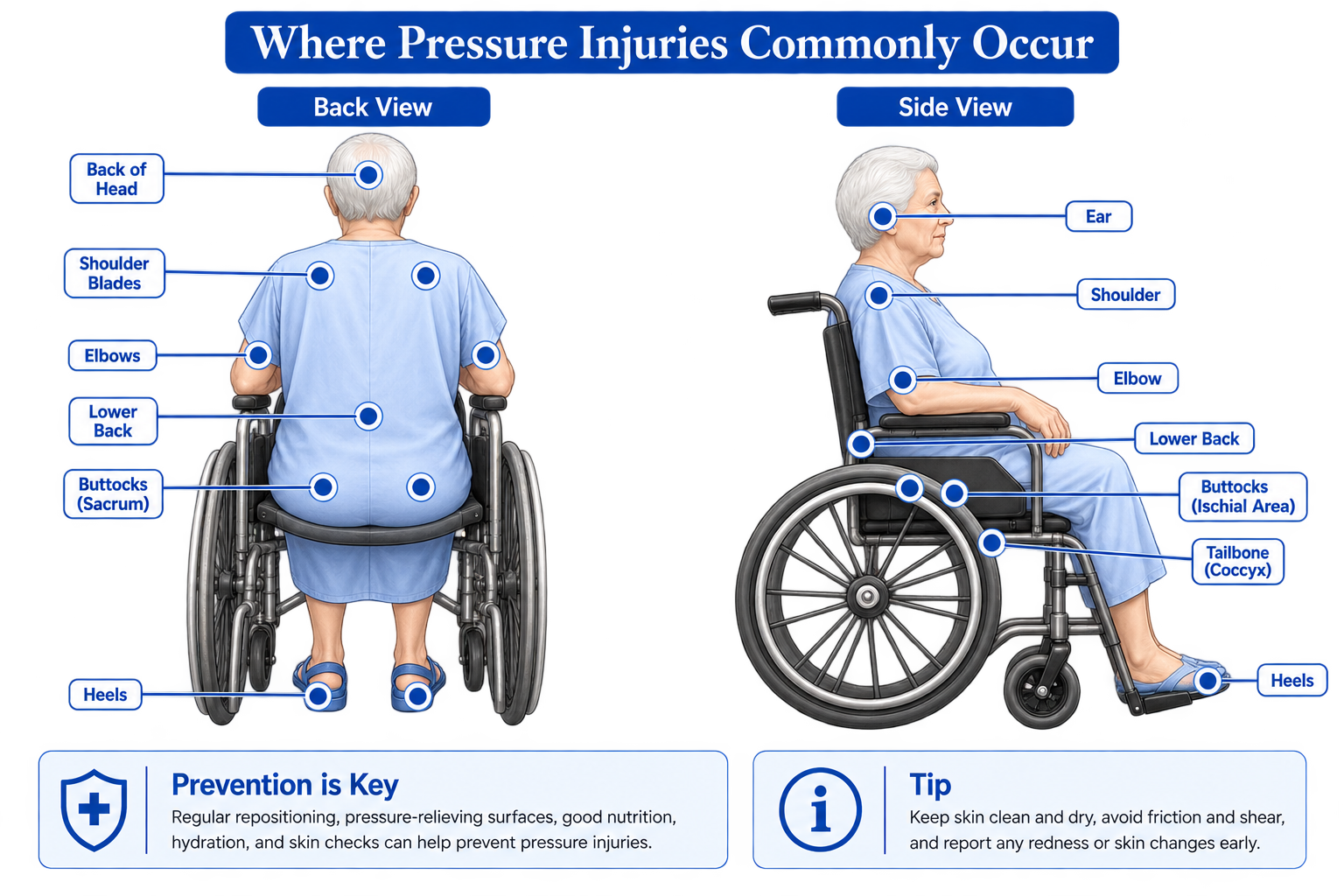
Useful wound documentation can include:
- Location.
- Stage or description.
- Length, width and depth.
- Drainage.
- Odor.
- Condition of surrounding skin.
- Pain.
- Evidence of undermining or tunneling.
- Treatment being used.
- Change over time.
Why wound measurements over time matter
One wound measurement is only a snapshot. Families should ask whether the wound is getting smaller, larger, deeper or otherwise changing. A worsening wound may require reassessment of pressure relief, infection, nutrition, treatment, blood flow or other contributing factors.
Pressure injuries, infection and sepsis
Open wounds can become infected. Warning signs may include increasing redness, warmth, swelling, pain, drainage, foul odor, fever or a sudden change in the resident's condition.
Sepsis is a medical emergency. Sudden confusion, fever, low blood pressure, rapid breathing, extreme weakness or other signs of systemic illness require prompt clinical evaluation.
Do not wait for a scheduled care-plan meeting when a resident appears acutely ill.
When might a pressure injury raise concerns about inadequate care?
A wound deserves closer review when:
- The resident's risk was not assessed.
- Staff did not follow the care plan.
- Repositioning or pressure relief was repeatedly missed.
- Necessary support surfaces were not provided.
- Moisture and incontinence were poorly managed.
- Significant weight loss or poor intake was not addressed.
- The wound worsened without timely reassessment.
- Signs of infection were not acted on promptly.
- Documentation is inconsistent or missing.
These facts do not automatically establish neglect, but they may justify requesting records and asking the facility to explain its prevention and treatment decisions.
Questions families should ask
Pressure injury family checklist
- When was the wound first identified?
- What stage or description has been assigned?
- What were the resident's known risk factors?
- What prevention plan was in place before the wound developed?
- What support surface is being used?
- How often is the resident repositioned?
- Has a dietitian evaluated the resident?
- How is the wound being measured and tracked?
- Has the physician or wound specialist been notified?
- Is the wound improving?
- What changed when the wound worsened?
Pressure injuries and nursing home quality data
CMS publicly reports quality measures related to pressure injuries for both short-stay and long-stay residents. Current CMS nursing-home quality reporting includes a long-stay measure for residents with pressure ulcers and a short-stay measure addressing new or worsened pressure ulcers or pressure injuries. These measures describe facility-level performance and should not be treated as proof of what happened to one resident. citeturn981268search0turn981268search1
Use our CMS Star Ratings guide and Complaints & Inspection Records guide when reviewing a facility's broader quality record.
Staffing and pressure-injury prevention
Pressure-injury prevention can require frequent hands-on care, including repositioning, toileting, skin checks, nutrition assistance and transfers. Staffing data alone do not establish why a wound developed, but persistent staffing problems may be relevant context.
See our Rhode Island Nursing Home Staffing Comparison guide.
What records may be relevant?
- Skin assessments.
- Care plans.
- Wound measurements and photographs where maintained.
- Treatment orders.
- Repositioning or care records where applicable.
- Dietitian notes.
- Weight and intake records.
- Physician or specialist notes.
- Hospital records if infection or sepsis occurred.
For broader warning signs, see our Warning Signs of Nursing Home Neglect guide and Rhode Island Nursing Home Abuse & Neglect Resource Center.